

In today’s rapidly evolving financial market, many beginners find it difficult to distinguish between a broker vs advisor and more importantly, to decide whether they should rely on them or learn trading independently.
Let’s simplify this.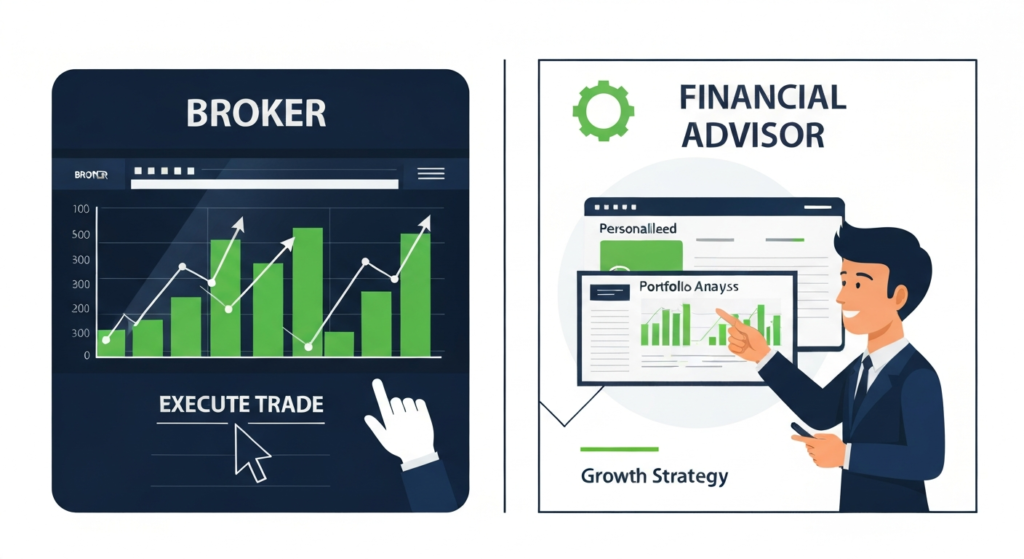
A broker is a platform or intermediary that executes your trades. They help you buy and sell stocks, derivatives, or other financial instruments. Brokers earn through brokerage fees or commissions.
👉 Example: When you place a trade, the broker simply executes it—they don’t guide you deeply on what to buy or sell.
A financial advisor provides expert guidance on where, when, and how to invest. They analyze the market, suggest strategies, and help you make informed decisions.
👉 Advisors usually charge a fee for their knowledge, research, and personalized support.
This depends on your goal:
The best strategy is not to blindly depend on others or jump in without knowledge. Instead, learn first, then invest. Why Learning Trading is Better than Depending on a Broker vs Advisor
When you invest in your knowledge:
You understand market movements
You reduce risk
You make informed decisions
You build a sustainable income skill
Paying someone for trading without understanding can be risky. But learning the right way gives you control over your financial future.
Our Courses – Learn Before You Earn
At Athworth Academy, we help you understand the role of a broker vs advisor while giving you the skills to trade independently.
Beginner to advanced level training
Practical and real-market exposure
Expert guidance with structured learning
Focus on skill-building, not dependency
Instead of continuously paying others to manage your trades, invest in yourself and learn the skill of trading. Once you understand the market, you can still take expert advice—but with confidence and clarity.